
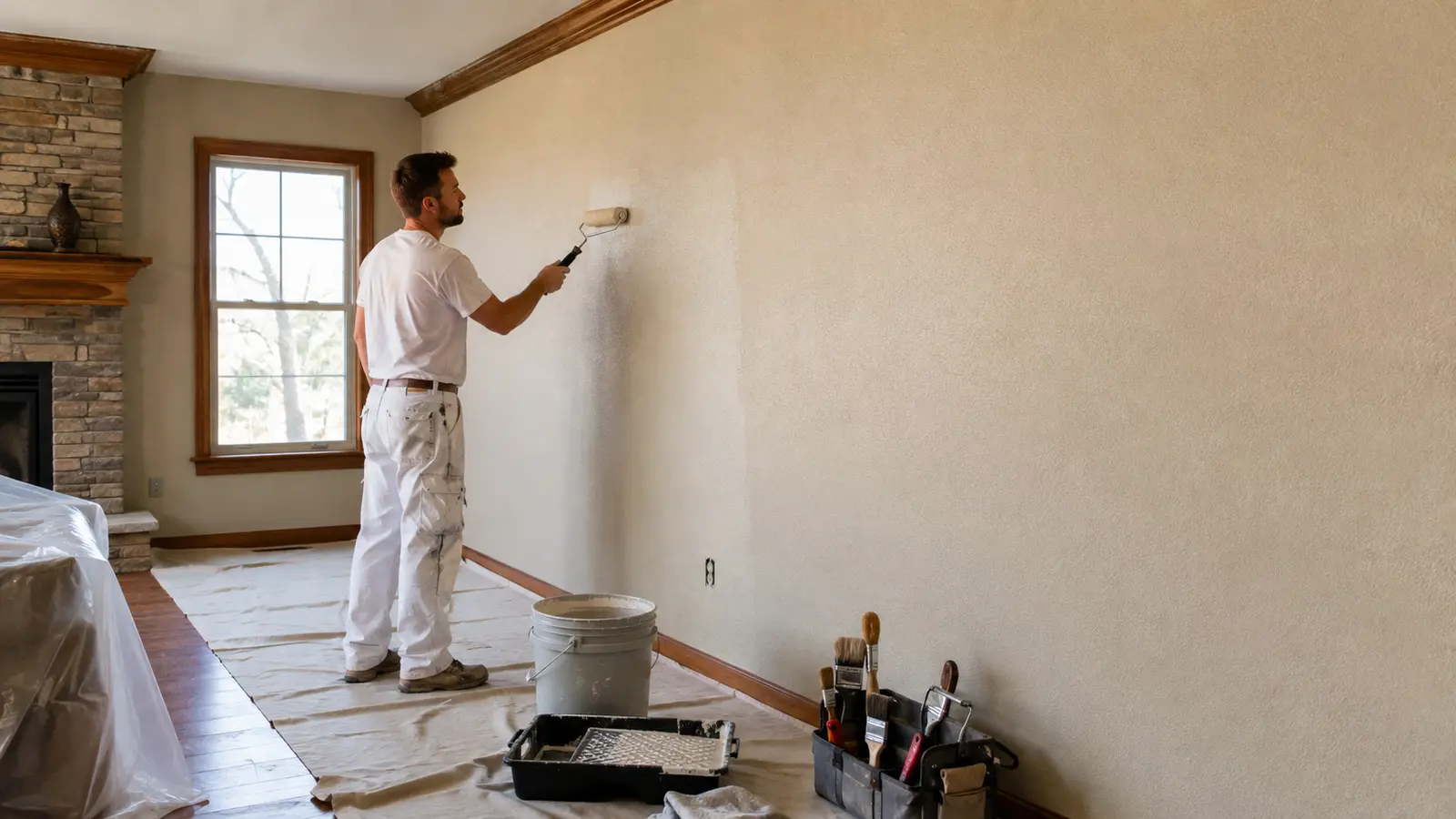
A careful approach to sand texture application
Sand texture uses fine aggregate within a coating or texture material to create a subtle, consistent surface pattern. It can add visual depth, soften minor surface variation, or help a repaired area coordinate with an existing textured finish.
The finished appearance depends on the aggregate, product consistency, application tool, roller direction, and drying conditions. A sample area is useful because small changes in technique can make the texture look heavier, lighter, or less uniform.
The wall still needs to be clean, stable, and properly prepared. Significant defects should be repaired rather than hidden under texture, and patched areas may require primer so the material dries and bonds consistently.
What your sand texture application project may include
- Assessment of the existing wall and texture
- Protection of floors, trim, fixtures, and nearby surfaces
- Minor patching, sanding, and primer where needed
- Mixing and controlled application of the texture material
- Coordinated finish paint when included in the scope
Why the preparation and process matter
Consistent material and technique help prevent obvious roller patterns, heavy areas, bare spots, and mismatched repairs. A controlled application creates texture that looks intentional rather than uneven.
Sand Texture Application in our service area
Explore local painting considerations for the six communities at the center of our service area:
We also serve Richfield, Kewaskum, Cedarburg, Sussex, Hartland, Grafton, Saukville, Port Washington, Mequon, Oconomowoc, Nashotah, with smaller surrounding communities reviewed based on location and project scope.
Frequently asked questions about sand texture application
Is sand texture the same as popcorn texture?+
No. Sand texture is generally a finer wall or ceiling finish, while popcorn texture is much heavier and more pronounced.
Can sand texture cover damaged drywall?+
It may soften very minor variation, but cracks, holes, loose material, and significant defects should be repaired before texture is applied.
Can a new textured area match an existing wall?+
A close blend is often possible, but the original product, age, application method, paint, and lighting all affect the match. A sample helps set expectations.